



以下为简短、正式的英文翻译,适合公告或课程说明使用:
Course Enrollment Link
https://www.ewant.org/admin/tool/mooccourse/mnetcourseinfo.php?hostid=35&id=16902
Instructions for Certificate Application & Download
Please refer to the attachment.
Deadline: February 28, 2026
Abstract
-
Carefully selected interesting and practical topics tailored for international students to design the course.
-
Scenario dialogues are performed by foreign students to showcase authentic communication.
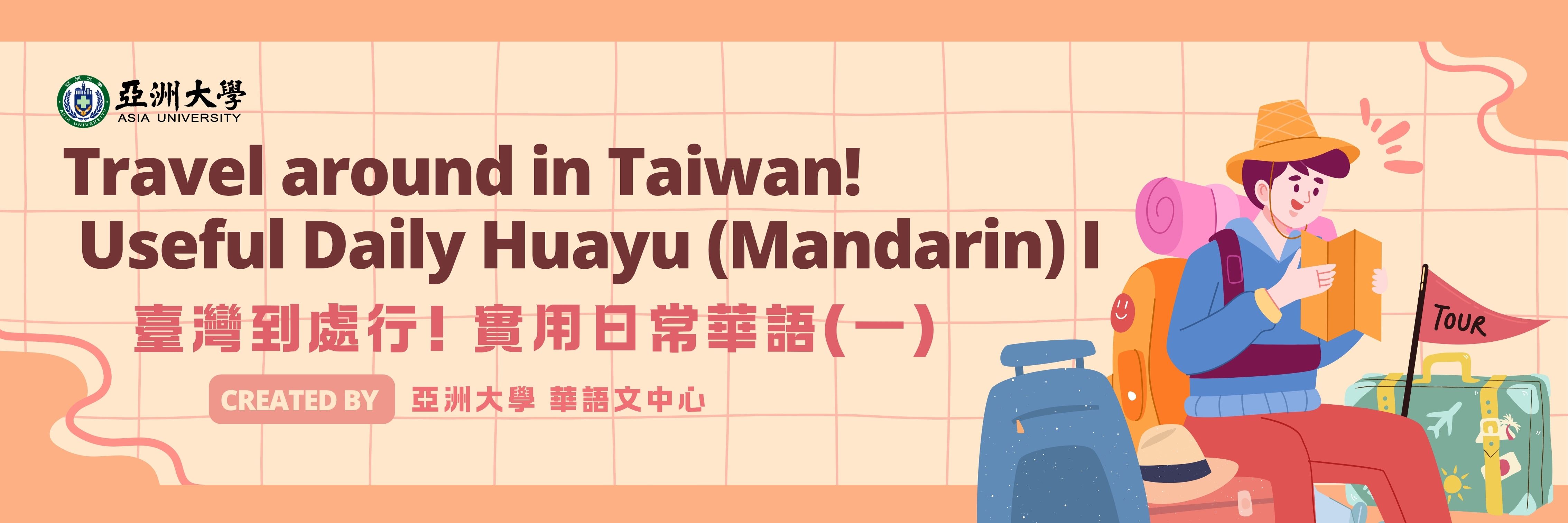
“Travel Around Taiwan! Practical Everyday Chinese” is a series of Chinese-language MOOCs designed for foreign students coming to study in Taiwan. The course aims to go beyond the limitations of textbooks and focuses on daily campus-life conversations for international students—especially those planning to study in central Taiwan. These digital learning materials help students adapt to life in Taiwan in advance and address common questions they might have before arrival.
In recent years, the number of international students in Taiwan has continued to grow. Their purposes range from volunteer service, short-term exchange, semester-based programs, to pursuing degrees. They can now be found on campuses at all educational levels. Taiwan is well known for its friendly people, and the general public is open and willing to interact with international visitors. However, communication through gestures or English often fails to fully convey meaning. Based on past experience interacting with international students, the ability to use basic Chinese vocabulary for everyday life and engage in simple conversations with the public is key to adapting to life in Taiwan.
Therefore, the Chinese Language Center of Asia University has designed this series of MOOCs specifically for international learners, hoping that they can acquire practical daily Chinese and interact smoothly with local residents.
Many Chinese-language teachers also have overseas teaching experience. Thus, “Travel Around Taiwan! Practical Everyday Chinese” includes communication scenarios commonly encountered by exchange students—such as school registration, shopping, and medical visits. Dialogues were written and performed by international students. After arriving in Taiwan, learners may continue watching the videos in this series based on their communication needs and apply what they learn in daily life.
**#Language Learning
Course Objectives**
-
Students will become familiar with the pronunciation of commonly used Chinese characters and vocabulary.
-
Students will acquire vocabulary and conversational skills related to campus life and everyday situations in Taiwan.
-
Students will practice simple Chinese dialogues and basic text messaging.
-
Students will learn about famous attractions and local features in the central Taiwan region.
This course series can serve as a pre-arrival Chinese course for international students or as supplementary material for online Chinese-language learning.
Instructors
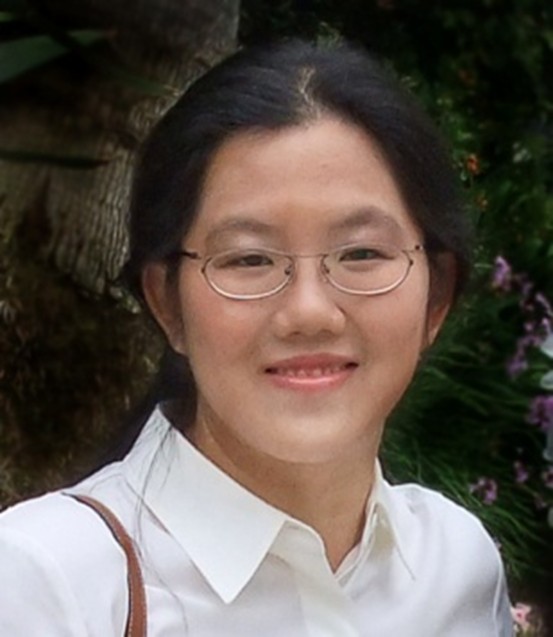 Yuen-Jean Mao
Instructor Bio:
Dr. Mao holds a Ph.D. in Theater and Performance Studies from the University of California, Los Angeles, and an M.A. in Theatre from Ohio University. She is currently a full-time faculty member at the Language Teaching and Research Center of Asia University, and has previously taught at National Taichung University of Education and in the Department of Foreign Languages.
Her areas of expertise include theater and performance studies. Her courses span English, drama, and performance creation. She emphasizes the integration of theory and practice, guiding students to experience creative expression and diverse thinking through language learning.
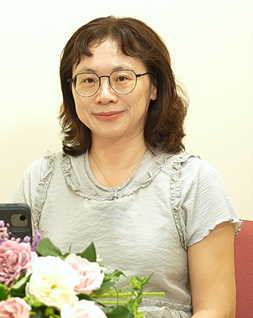 Hsiu-Ying Ho
Instructor Bio:
Ms. Ho holds a master’s degree from the Graduate Institute of Teaching Chinese as a Second Language at National Taichung University of Education and is currently a doctoral student in the same university’s Department of Language Education. She holds the Ministry of Education’s Certificate for Teaching Chinese as a Second Language (Certificate No. E1070134).
Her extensive teaching experience includes positions at National Taichung University of Education, Yu Da University of Science and Technology, and Yuanpei University of Medical Technology. She has also served as an adjunct Chinese instructor at National Chi Nan University and China Medical University. Ms. Ho has a diverse and solid background in teaching Chinese.
 Meng-hsun Wang
Instructor Bio:
Ms. Wang holds a master’s degree in Human Resource Management from National Central University and completed the Chinese teacher training program at National Taichung University of Education. She is certified by the Ministry of Education to teach Chinese as a second language.
With expertise in psychology and human resource management, combined with training in Chinese language education, she guides learners from multiple perspectives, fostering both language proficiency and cross-cultural understanding.
Course Schedule
Unit 1: I'm a New International Student
Unit 2: What to Do When You’re Sick
Unit 3: Go to the Clinic and Hospital to See a Doctor
Unit 4: Midterm Exam
Unit 5: Taiwanese Vegetables and Fruits
Unit 6: Taiwanese Cuisine
Unit 7: Final Exam
Course Content
| Week | Topic | Summary / Subtopics | Activities |
|---|---|---|---|
| Week 1 | I’m a New International Student | 1. Who am I? 2. Where am I from? 3. Why did I come to Taiwan? 4. What will I do in Taiwan? | Vocabulary & sentence-pattern practice, Quiz |
| Week 2 | What to Do When You’re Sick | 1. When you’re sick… 2. Body parts 3. Physical conditions 4. Describing discomfort | Vocabulary practice, sentence making, Quiz |
| Week 3 | Go to the Clinic and Hospital | 1. Where is the nearest clinic/hospital? 2. Registration to picking up medicine 3. Hospital departments and services 4. How to use National Health Insurance | Reading materials, picture-based vocabulary, Quiz |
| Week 4 | Midterm Exam | — | — |
| Week 5 | Taiwanese Vegetables & Fruits | 1. Common vegetables in local markets 2. Quantities & units 3. Common fruits 4. Buying vegetables & fruits dialogue | Vocabulary practice, picture recognition, Quiz |
| Week 6 | Taiwanese Cuisine | 1. Food-related adjectives 2. Comparing foods 3. Comparing food stands vs restaurants 4. Ordering food dialogues | Reading materials, sentence pattern practice, Quiz |
| Week 7 | Final Exam | — | — |
Grading Policy
-
Quizzes: 20%
-
Midterm Exam: 40%
-
Final Exam: 40%
Passing Standard
-
Passing score: 60 out of 100
Prerequisites
-
Designed for international students with no prior Chinese knowledge (0 proficiency) or below A1 level.
Recommended References
-
Yang, Shiou-Hui (2024). 300 Sentences for Speaking Chinese (English Version, 2nd Edition). Wunan Publishing.
-
Kaku Hisayo, Lin Pei-yu, et al. (2019). FLTA Self-learning Chinese Picture Book. Fulbright Taiwan.
-
Taiwan Chinese Learning Resources Center. Chinese 101. https://lmit.edu.tw/lc/huayu101/